A Homeowner’s Guide to Seamless Gutters in Eustis FL for Cleaner Roof Runoff
If you own a home in Eustis, you already know that water rarely arrives in a polite, predictable way. Around Central and North Florida, warm-season thunderstorms can build fast, dump hard rain, then move on just as quickly. Add in tropical moisture, long humid stretches, and debris from oaks and pines, and you have the exact conditions that expose every weak point in a gutter system.
That is why seamless gutters matter so much here. They are not just a finishing detail attached to the roofline. They are part of the way a house handles runoff, protects siding and fascia, and keeps water moving instead of spilling where it should not. When they are sized and installed well, they look clean and work quietly. When they are neglected, clogged, or poorly pitched, they can make a mess of things in a single storm.
Homeowners often start paying attention to gutters after they notice an obvious problem, water sheeting over the front entry, splashback against the walls, or dark streaks along the gutter face. By that point, the issue has usually been building for a while. In Eustis, and in nearby communities where homeowners also search for seamless gutter installation Leesburg FL or seamless gutters Gainesville FL, the same pattern shows up again and again. Heavy rain tests the system. Trees load it with debris. Humidity keeps damp material sitting longer than it should.
A good gutter setup is not complicated in theory. Roof runoff needs a clear path from roof edge to gutter, through a properly pitched channel, into downspouts, and away from the home. In practice, that path gets interrupted by leaves, acorns, pine needles, small limbs, loose fasteners, sagging sections, and the occasional rushed repair that never really solved the root problem. Seamless gutters reduce some of those failure points, especially along the runs where sectional joints would otherwise collect debris or leak over time.
Why seamless gutters fit Florida homes so well
The word “seamless” can sound like a sales term until you look at what usually fails first on older gutter systems. It is often the joints. Every connection is a place where water can escape, where sealant can age, or where debris can catch and start building a dam. A seamless system has fewer of those interruptions along the horizontal runs. That alone does not make it maintenance-free, but it does simplify the path water takes during a hard downpour.
That matters in Florida because runoff can go from light to intense in minutes. During the warm season, thunderstorms regularly deliver heavy bursts of rain. A gutter that handles a gentle shower just fine may still overflow in a stronger storm if the pitch is off, the outlet is undersized, or debris has narrowed the channel. Cleaner runs with fewer seams help the system move water more efficiently.
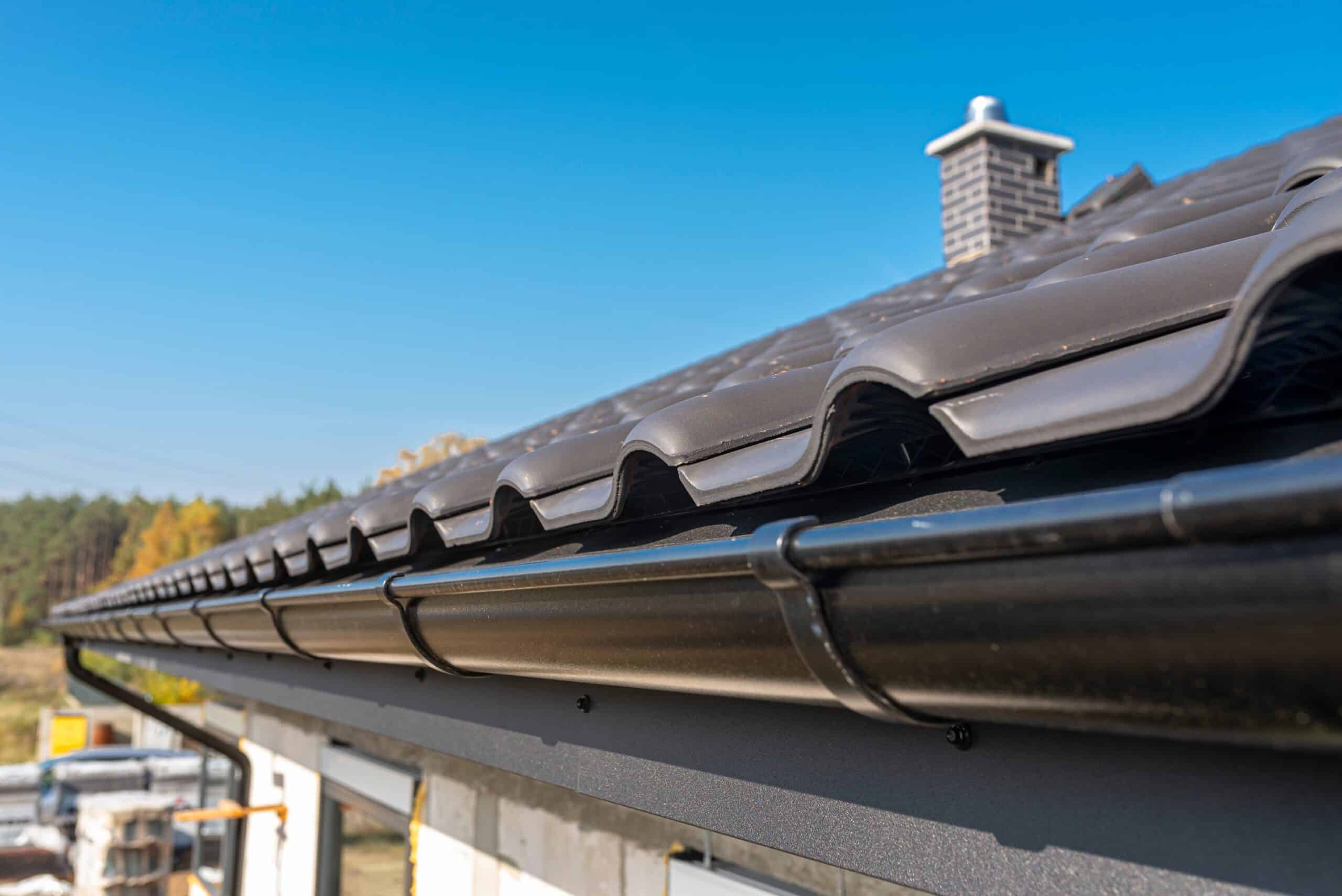
There is also the appearance side of it, which homeowners should not dismiss. A continuous gutter run usually looks sharper against the roofline than multiple pieced-together sections. On many homes, that cleaner line makes the whole exterior feel more finished. It is one of those upgrades people notice without always knowing why the house looks better.
The practical advantage, though, is what keeps seamless gutters relevant year after year. Less leakage at joints. Less chance for trapped debris in every connection. Fewer places for minor issues to turn into chronic ones.
What “cleaner roof runoff” really means
Cleaner roof runoff is not about making rainwater pure. It is about keeping the water moving through the intended path instead of letting it carry organic debris, overflow onto walls, or dump right next to the home in concentrated sheets.
On a typical Florida property, the roof gathers more than water. Wind brings down leaves, oak tassels, acorns, pine needles, and little twigs. UF/IFAS materials routinely point out how common that debris is and why it should be kept out of drainage paths. Once it sits in a gutter, it holds moisture, slows flow, and starts acting like a filter you never wanted. Water has to push through it, around it, or over it. During a heavier storm, that often means overflow.
Overflow is not always dramatic. Sometimes it starts as a steady curtain of water at one corner. Sometimes it splashes from a clogged downspout opening. Sometimes it jumps the gutter entirely because debris has created a mound high enough to redirect the flow. Over time, that kind of runoff leaves stains, keeps trim damp, and increases wear on surrounding materials.
So when homeowners talk about cleaner runoff, what they usually want is straightforward. They want less debris trapped in the system, fewer backups, and more controlled drainage when summer rain turns serious.
The Eustis factor: storms, humidity, and tree debris
Eustis sits in the kind of Florida climate where gutters earn their keep. The region gets frequent thunderstorms in the warmer months, driven by sea breezes and tropical moisture. Even without a named storm, an ordinary summer afternoon can produce rain intense enough to show you exactly how your gutters are performing.
Humidity adds another layer. Debris does not dry out as quickly as it might in a less humid place. Wet leaves and needles can mat together and stay heavy. Organic material sitting in damp conditions tends to cling, compact, and become harder to rinse out naturally. If your home is shaded by mature trees, especially oaks or pines, the buildup can come in waves rather than as a one-time seasonal event.
Live oaks are a prime example. Their leaves and acorns can accumulate in gutters and downspouts, sometimes deceptively fast. Pine needles are another classic Florida culprit. They slide down roofs easily, then knit together in corners and outlets. Small limbs and seed litter make the problem worse after windy weather. Homeowners in nearby areas looking for gutter cleaning Leesburg FL or gutter cleaning and repair Ocala FL often describe the same cycle, because the climate and vegetation create similar wear patterns across the region.
This is where local judgment matters. A gutter system that performs well on a wide-open lot may struggle on a heavily treed property. A house with one-story rooflines may be easier to maintain than a taller home with multiple valleys and transitions. The right setup depends as much on the site as it does on the product.
Installation quality matters more than most people realize
A seamless gutter is only as good as the installation behind it. Homeowners tend to focus on the material or color first, but the performance issues I see most often come down to layout and execution. Pitch has to be right. Downspout placement has to make sense for the roof area feeding each run. Fastening has to be secure enough to hold shape under repeated heavy water loads and debris weight.
Even a small pitch problem can create standing water. It may not be obvious from the ground, but you can often spot the results. Water marks linger inside one section. Debris collects in one low pocket while the rest of the run looks relatively clear. Mosquitoes show up around stagnant spots. During a storm, one section overflows while another seems underused.
This is where working with an experienced gutter contractor Central Florida or a team familiar with gutter installation North Florida can make a real difference. Local installers understand that these systems are not facing occasional rain. They are facing repeated bursts of heavy runoff, humid conditions, and tree debris that can change from one neighborhood to the next.
A contractor should be thinking beyond “Will this fit the house?” and asking “How will this behave during the strongest ordinary storms this area sees?” That is a better standard.
The gutter guard question homeowners always ask
Sooner or later, almost every homeowner asks whether gutter guards are worth it. The short answer is that they can help a lot, but they are not magic. A guard can reduce the amount of debris entering the gutter channel. It can also cut down the frequency of cleaning. What it cannot do is turn a tree-heavy roofline into a no-maintenance system.
That distinction matters because expectations drive satisfaction. A well-chosen guard paired with solid installation can be a great fit for homes under oaks or pines. It can keep larger leaves and much of the debris load from settling directly in the trough. It can also help water move more consistently toward the outlets. That is why interest in gutter guard installation Central Florida and gutter guards Gainesville FL stays strong in areas with heavy vegetation and recurring summer storms.
Guard style matters. Common types include brush, foam insert, mesh screen, micro-mesh, PVC covers, and reverse-curve designs. Each has trade-offs. Some are better at blocking larger debris than fine particles. Some handle pine needles better than others. Some are easier to inspect or clean. Some perform differently when rainfall comes down hard and fast. The right answer depends on what falls on your roof most often and how much maintenance you are realistically willing to do.
The best conversations about guards are honest ones. If a property is ringed with trees, a homeowner should expect reduced maintenance, not eliminated maintenance. If a property gets light debris but strong seasonal storms, the goal may be to keep outlets clearer and flow steadier. A good installer will frame it that way.
Signs your current gutters are not keeping up
You do not need to wait for visible damage to tell you the system needs attention. A lot of gutter trouble gives warning before it becomes expensive or annoying enough to force action.
- Water spilling over the front or sides during a normal heavy rain
- Gutters that sag, pull away, or look uneven along the roofline
- Downspouts that drip weakly during storms while the gutter itself overflows
- Damp debris packed into corners, outlets, or behind gutter guards
- Staining on the gutter face or repeated splashback against siding
Those clues do not all point to the same fix. Overflow might mean a clog, a pitch issue, too much debris, or a guard that is not handling the roof’s runoff well. Sagging could indicate loose fasteners, excess weight from debris, or simple age. That is why an inspection should look at the whole path, not check it out just the most obvious symptom.
Seamless installation versus repair, how to think about the choice
Not every problem means you need a full replacement. Some systems just need targeted work. A loose section, a misaligned downspout, or a localized leak may be a repair issue rather than an installation issue. Homeowners searching for gutter repair Gainesville FL are often trying to make this exact decision, and the answer usually comes down to age, condition, and how many separate weaknesses have started showing up at once.
If the existing system is mostly sound and the trouble is isolated, repair can make sense. If the gutters are old, patched in several places, frequently clogging, and still leaking at multiple connections, seamless replacement often becomes the cleaner long-term move. You end up solving several small recurring problems at once instead of paying to revisit them one by one.
I usually tell homeowners to step back and look at pattern, not just price. A single repair bill is almost always cheaper than replacement. Three or four repair visits over two storm seasons is a different story. So is the inconvenience of ongoing overflow every time a stronger thunderstorm rolls through.
What gutter cleaning should look like in this climate
Florida homeowners sometimes underestimate how much local debris load shapes maintenance needs. There is no one calendar that fits every house. A home in an open subdivision may need far less attention than a home under mature tree cover. The wet season also changes the stakes, because a partially blocked system can go from “mostly fine” to overwhelmed in one strong storm.
Good gutter cleaning is not just scooping out obvious leaves. It means clearing packed material from the trough, checking outlets, making sure downspouts are actually flowing, and spotting early wear while you are there. Pine needles are notorious for hiding in places that look open from the ground. Acorns can gather at choke points. Wet leaf sludge can settle flat enough to escape notice until water starts backing up.
That is one reason many homeowners combine cleaning with a closer inspection or minor service call. If you are already addressing debris, it is smart to note any loose sections, standing water, or signs that the pitch has changed. Pairing cleaning with small repairs can keep a system from drifting into larger trouble.
For households in nearby service areas, whether they are looking up gutters The Villages FL or comparing options for gutter maintenance Florida, the same principle holds. Cleaning is preventive work, not cosmetic work. Done at the right time, it keeps runoff controlled when weather gets rough.
Why gutter guards help some homes more than others
A heavily treed lot usually sees the biggest payoff from guards, but not always in the way people expect. The value is not just fewer cleanings. It is also that the cleanings tend to be easier because debris stays more on the surface or accumulates in smaller amounts instead of compacting deep into the trough.
Still, roof design, debris type, and rainfall pattern all affect results. Fine pine needles can test some guard styles more than broad oak leaves do. Acorns can create their own issues depending on the opening size and the surrounding roof area. During strong summer rainfall, water behavior at the edge of the roof can matter as much as the debris load.
That is why guard selection should not be treated like buying a generic accessory. It is part of the drainage system. On one house, a mesh or micro-mesh option may make practical sense. On another, a different approach may fit better. The decision should come from the conditions on that property, not from a one-size-fits-all pitch.
Questions worth asking before you hire a gutter company
A good contractor does not mind detailed questions. In fact, clear answers are often the easiest way to tell whether someone understands local conditions or is just selling a standard package.
- How will you account for heavy summer rain and local debris from oaks or pines?
- Will you inspect pitch, downspout placement, and flow path, not just measure the roof edge?
- If I add guards, what kind of maintenance should I still expect?
- Do you recommend repair or replacement here, and why?
- What signs would tell me this system needs follow-up service later?
Those questions shift the conversation from product talk to performance talk. That is exactly where it should be. If the answers are vague, homeowners usually feel it right away.
Real-world trade-offs homeowners should know
Every gutter decision involves some compromise. Seamless gutters reduce joints, but they still need maintenance. Guards reduce debris intrusion, but they do not remove the need for inspection. Repairs cost less upfront, but replacement can be cheaper over time if failures are stacking up. Bigger expectations often lead to disappointment, while realistic ones usually lead to a system that feels dependable.
There is also a balance between appearance and access. Some homeowners love the cleaner look guards can create. Others prefer an open system that is easier to inspect visually. Neither preference is wrong. It depends on the debris load, the home’s design, and how actively the owner wants to manage maintenance.
Then there is timing. Waiting until peak rainy periods can make every gutter issue feel urgent. Planning inspection, cleaning, repair, or seamless gutter installation before the wettest stretches gives you more control and fewer surprises. That is one of the simplest forms of prevention available.
A practical way to think about maintenance from year to year
The smartest homeowners I have worked with do not try to guess whether gutters need attention based on memory alone. They pay attention after major debris drops, after windy storms, and before the rainiest parts of the warm season. They understand that maintenance is shaped by what is above the roof as much as by the gutter itself.
If your property has mature trees, especially oaks and pines, assume debris will keep testing the system. If your gutters have overflowed once, do not treat that as a fluke until someone confirms why it happened. If you install guards, inspect them early enough to learn how they behave on your house, not just how they were supposed to behave in theory.
That kind of practical attention is what keeps a drainage system boring, and boring is exactly what you want from gutters. You want them to disappear into the background and do the job every time the sky opens up.
What homeowners in Eustis should take from all this
For an Eustis home, seamless gutters are not a luxury item. They are a sensible response to a climate that mixes frequent thunderstorms, high humidity, and debris-prone rooflines. Their main strength is simple, fewer joints along the runs means fewer common trouble spots. When paired with thoughtful installation and realistic maintenance, they help keep roof runoff cleaner and more controlled.
If your current system struggles every storm season, leaks at connections, or packs up with oak leaves and pine needles, it may be time to look beyond another temporary fix. For some homes, that means better cleaning and minor repairs. For others, it means moving to a seamless setup and considering gutter guard installation Central Florida homeowners often ask about for debris-heavy lots.
The goal is not perfection. The goal is dependable performance when Florida weather does what Florida weather does. When your gutters can carry runoff cleanly, shed debris more effectively, and recover quickly after storms, the whole house benefits. That is the real value, not just cleaner lines at the roof edge, but less stress every time dark clouds roll in.

Ends · GUTTERGUIDE277