Common Gutter Repair Problems on Homes in Lake County FL and What Causes Them
If you spend enough time looking at gutters on homes around Lake County, you start to notice a pattern. The same repair calls come up again and again, even on houses that look fine from the street. A gutter system can seem simple, but in Central Florida it works under real pressure. Summer thunderstorms drop a lot of water fast. Humidity stays high. Tropical moisture can turn an ordinary afternoon into a drenching rain. Add leaves, pine needles, acorns, and small limbs to that mix, and small gutter issues do not stay small for long.
That is especially true in places like Leesburg, The Villages, and nearby communities where roof runoff has to move quickly and cleanly away from the house. When gutters fail, the first signs are often subtle. A dark streak on fascia. Water falling over the front edge during a storm. A section that sags just enough to hold standing water. By the time a homeowner notices interior staining or soil washout near the foundation, the gutter problem has usually been building for a while.
The good news is that most gutter damage follows predictable causes. Once you understand those causes, it becomes much easier to decide whether you need a repair, routine gutter cleaning Leesburg FL homeowners can stay ahead of, or a more permanent upgrade like seamless gutter installation Leesburg FL property owners often choose after repeated trouble.
Why Lake County homes see the same gutter issues
Florida’s warm season is hard on exterior systems. Heavy rainfall from summer thunderstorms and tropical disturbances is a recurring concern across the region. In practical terms, that means a gutter does not just need to carry water, it needs to carry a lot of water during short, intense bursts. A system that might be adequate in a drier climate can struggle here if it is clogged, undersized, loose, or pitched incorrectly.
Then there is the debris. In Florida landscapes, live oak leaves and acorns are common. Pine needles are common. Small limbs are common. None of that is unusual, and all of it can end up in a gutter trough or downspout. UF/IFAS guidance has long emphasized keeping plant debris out of runoff paths because it clogs drainage. That applies just as much to a residential gutter line as it does to any other stormwater route on a property.
Humidity adds another layer. Moist, shaded debris sitting in a gutter does not dry out quickly. It compacts. It traps more debris. Water slows down, then backs up. That is why a minor buildup that seems harmless in early spring can become a real overflow issue by the middle of the rainy season.
Clogs are the repair trigger behind a lot of other damage
The most common gutter problem is still the simplest one, blockage. A clog by itself is bad enough, but the bigger issue is what it leads to. When water cannot move through the gutter and into the downspouts, it spills over the edge or sits in place. Overflow can soak fascia and siding. Standing water adds weight to the system. Debris stays wet and heavy. Fasteners loosen, joints strain, and the gutter begins to pull away.
In Lake County, clogs often come from a mix of materials rather than one single culprit. Oak leaves mat together. Pine needles weave into tight dams. Acorns settle in low spots and around outlets. Small twigs catch everything that comes after them. Once a downspout opening narrows, the whole run can start behaving like a blocked pipe even if half the gutter still looks open.
This is one reason regular gutter maintenance Florida homeowners schedule before and during the wet season matters so much. Waiting until water is visibly pouring over the side usually means the debris load has already caused secondary issues.
Sagging gutters usually start with weight and poor drainage
A sagging gutter is rarely just an age problem. More often, it is a drainage problem that has been allowed to continue. Water is heavy. Wet leaves are heavy. Saturated pine needles are heavier than most people expect. A gutter that should be shedding water quickly can end up carrying a dead load for days if the pitch is off or the outlets are obstructed.
Once that weight builds, sections can begin to dip. A sagging area then traps even more water, which speeds up the problem. This is where repairs can become a judgment call. If the metal itself is sound and the hangers can be reset, a targeted repair may solve it. If the run has multiple low spots, strained joints, or recurring overflow, replacement starts making more sense.
This is one reason seamless gutters Gainesville FL homeowners ask about are often part of a longer-term fix rather than just a cosmetic upgrade. Fewer joints can mean fewer trouble spots for leaks and debris snags. That does not make a seamless system maintenance-free, but it can simplify the weak points.
Leaks at seams and joints are common, and not always where homeowners expect
Traditional sectional gutters have multiple joints, and every joint is a possible leak point. Over time, water movement, debris accumulation, and routine expansion and contraction can stress those seams. In a climate with frequent rain events, a small seam leak can reveal itself quickly as drip lines, fascia staining, or damp soil directly below one joint.
What catches some homeowners off guard is that the visible drip is not always the only issue. Water escaping at a seam often means water is lingering in that area longer than it should. That could be due to a partial clog upstream, a pitch problem, or a sagging section putting stress on the connection.
A repair technician doing gutter repair Gainesville FL homes need will usually look beyond the leaking seam itself. Sealing or reconnecting a joint without correcting the drainage cause is often temporary. If the gutter still holds water, the leak tends to return.
Downspouts become chokepoints faster than people realize
A gutter can look relatively clear from the ground and still fail because the real blockage is in the downspout or at the outlet. This is common after storms that drop small leaves, seed pods, needles, and twigs all at once. The gutter trough may pass some water, but once enough material collects at the outlet, water backs up across the entire run.
This is one of those issues that can fool even attentive homeowners. They see one section overflowing and assume the low area is the problem, when the actual restriction is several feet away. In practice, downspout blockages often show up as water spilling over near a corner or at the midpoint of a long run, depending on how the system was pitched.
Homes that need gutter cleaning and repair Ocala FL and Lake County properties often share this same pattern because the climate and landscape debris pressures are similar across much of Central Florida and nearby North Florida.
Improper pitch causes chronic overflow
Gutters are supposed to move water, not store it. If the slope is too flat, water lingers. If the pitch changes direction unexpectedly, one section may fill while another stays dry. If a repair was done piecemeal without rechecking alignment, one corrected section can throw the next section out of balance.
Pitch problems do not always announce themselves immediately. During a light shower, the gutter may appear to work. During one of Florida’s heavier downpours, that same run can sheet water over the front edge because it simply cannot move runoff to the downspout fast enough.
This is where experience matters. A true drainage problem is not solved by just reattaching a loose area. The entire run has to be evaluated as one system. A seasoned gutter contractor Central Florida homeowners trust will usually inspect how water is meant to travel from one end to the other, then correct both alignment and support.
Pulling away from the fascia is often a late-stage symptom
When a gutter starts separating from the house, homeowners often think the fasteners have just worn out. Sometimes that is true, but more often the fasteners gave up after months or years of excess strain. Clogs, standing water, and sagging all increase the load against the attachment points.
You can often spot this issue after a storm. The gutter may tilt forward slightly, or you may see water running behind it instead of into it. That backside overflow can be rough on the wood trim behind the gutter. It can also send water to places the system was supposed to protect.
At that stage, the conversation often shifts from isolated repair to whether the whole installation still makes sense. For some properties, gutter installation North Florida and Central Florida contractors recommend is less about adding something new and more about replacing an aging system that has been patched too many times.
Gutter guards help, but they are not one-size-fits-all
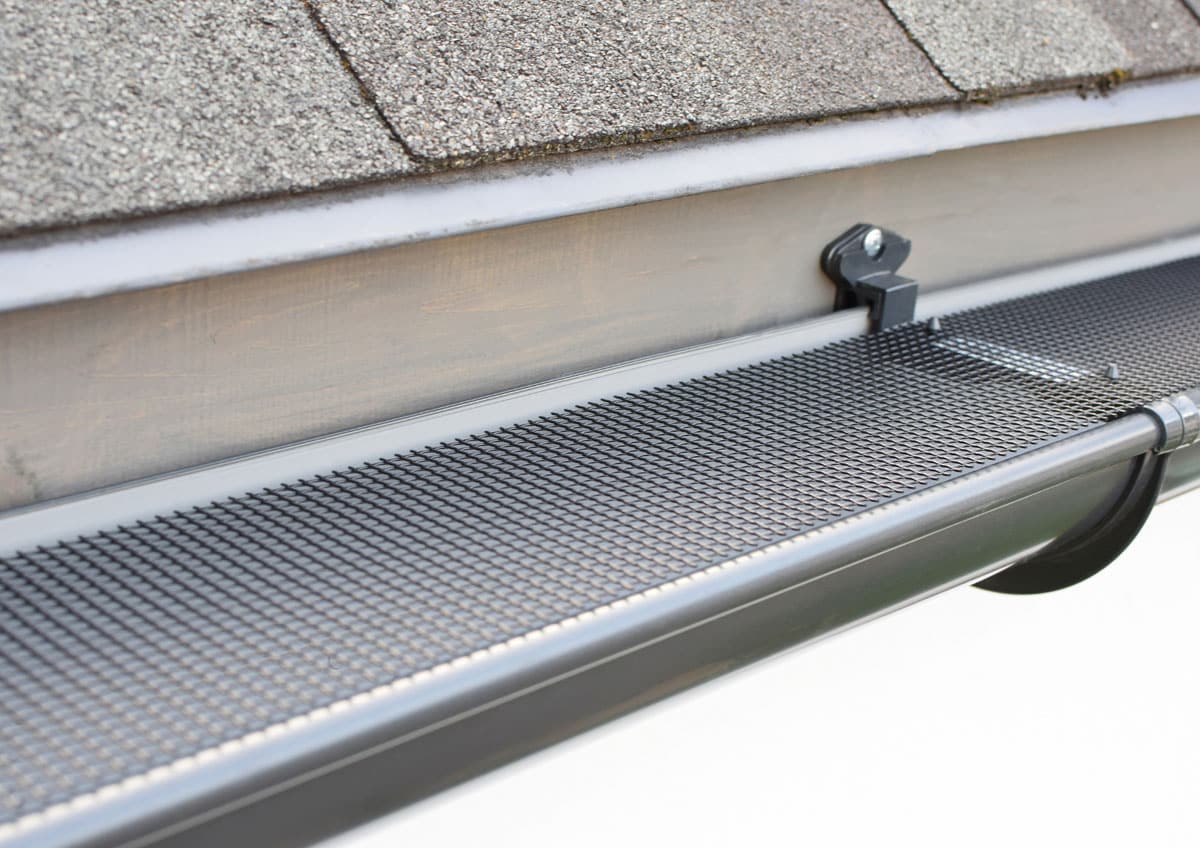
A lot of homeowners ask whether guards will solve their repair headaches for good. The honest answer is that gutter guards can reduce debris entry, but they have to match the environment. Common guard styles include brush, foam insert, mesh screen, micro-mesh, PVC covers, and reverse-curve designs. Each style handles debris and water a little differently.
In a tree-heavy setting with lots of needles and small leaves, some guard types perform better than others. In areas with acorns and mixed debris, the wrong product can create its own maintenance challenges. That is why gutter guard installation Central Florida homes benefit from should be based on the actual debris pattern around the property, not just a generic promise of maintenance-free gutters.
I have seen homeowners assume that any guard means no more cleaning. In reality, guards usually reduce cleaning frequency and change the kind of maintenance needed. Debris can still collect on top of the guard, around valleys, or in outlets. Some systems shed oak leaves well but struggle with fine needles. Others block larger debris yet need occasional rinsing to keep water flowing efficiently during heavy storms.
That does not mean guards are a bad idea. It means realistic expectations matter. The best gutter guards Gainesville FL homeowners see more choose are the ones that fit the roofline, nearby tree cover, and rainfall intensity they actually deal with.
The repair issues that show up after neglected cleaning
If a homeowner wants the short version of what neglect costs, it usually comes down to five recurring problems:
- Overflow during storms, even if the gutter looks attached
- Sagging sections from trapped water and wet debris
- Leaks at seams or corners under standing-water pressure
- Downspout backups that force water over the gutter edge
- Fascia staining or moisture exposure where water runs behind the system
None of these start as expensive-looking problems. That is what makes them easy to ignore. A few oak leaves in spring does not feel urgent. A little overflow in one storm seems temporary. Then the rainy season settles in and the volume of water exposes every weak point at once.
When a repair is enough, and when replacement is smarter
One of the harder parts of gutter work is knowing when not to keep repairing. A single leak at a seam on an otherwise sound system is a repair. A loose hanger or two after a debris overload is usually a repair. A downspout clog with no structural damage is definitely a maintenance and repair issue, not a full replacement issue.
But there is a tipping point. If multiple sections sag, several seams leak, and the system has recurring pitch problems, a patch can become more expensive than a reset. The homeowner pays for the same trouble over and over, and every storm tests whether the last fix will hold.
That is often when seamless gutter installation Leesburg FL homeowners consider starts to make sense. Seamless systems reduce the number of joints along the run, which can lower the number of future leak points. They are not immune to clogs or storm debris, but they remove one common failure source from the equation.
For larger service areas, the same logic applies whether someone is searching for seamless gutters Gainesville FL, gutters The Villages FL, or a dependable gutter contractor Central Florida families can call before the next wet season ramps up.
What homeowners should watch for before calling for service
You do not need to wait for dramatic failure to know a gutter needs attention. Most systems give warnings first. The trick is learning to notice them while they are still manageable.
Here are the signs worth paying attention to around the house:
- Water spilling over the front edge during ordinary rain
- Dark streaks or damp marks on fascia below a joint
- One section of gutter that looks lower than the rest
- Small plants or packed debris visible from the ground
- Water pooling near the home where downspouts should be moving it away
Those signs do not always mean major repair, but they almost always mean something in the system is not moving water properly.

Why local conditions should shape the fix
A gutter solution that sounds perfect in another state may not hold up the same way in Lake County. The mix of high humidity, frequent summer rain, and common Florida debris changes what works best. A homeowner with heavy oak leaf drop has a different maintenance profile than one dealing mostly with pine needles. A roofline with repeated overflow may need more than cleaning if the pitch or support layout is wrong.
That local judgment is what separates quick fixes from durable ones. The right recommendation may be basic gutter cleaning Leesburg FL residents need before storm season. It may be selective gutter repair Gainesville FL homeowners have put off too long. It may be gutter guard installation Central Florida properties can genuinely benefit from because debris pressure is constant. Or it may be a full update to a more streamlined system after years of leaks and sagging.
The main point is simple. Gutters fail in patterns, and those patterns have causes. In Lake County, those causes usually come back to rain intensity, debris buildup, poor drainage, and the extra strain that Florida weather puts on every weak point. Catch those issues early and repairs stay straightforward. Ignore them through one wet season too many, and a small service call can turn into a much bigger project.
For most homes, good gutter performance is not about fancy extras. It is about keeping water moving, keeping debris from taking over, and choosing repairs or upgrades that fit the way Central Florida weather really behaves.
Ends · GUTTERGUIDE277